
Used Car Database Design
Overview
Goal: To take a raw dataset and bring it through all design phases into a working, queryable database.
Data:
I found a dataset about used car sales in the U.S. between 2014 and 2015. The data gives information about the vehicle, and where and when it was sold.
| Column | Description | Example Value |
|---|---|---|
| year | Model year of the vehicle sold | 2014 |
| make | Manufacturer of the vehicle | Kia |
| model | Model of the vehicle | Rio |
| trim | Identifies included features | LX |
| body | Type of vehicle | Sedan |
| transmission | Transmission style of vehicle | automatic |
| vin | Vehicle Identification Number | knadm4a35e6327128 |
| state | U.S. State car was sold in | tx |
| condition | Rating of vehicle condition | 39 |
| odometer | Odometer reading at time of sale | 27187 |
| color | Exterior paint color | silver |
| interior | Interior finish color | black |
| seller | The entity that sold the vehicle | tdaf remarketing |
| mmr | Manheim Market Report, an estimated market value | 10650 |
| sellingprice | Price vehicle sold for | 10200 |
| saledate | Date of sale | Wed Feb 11 2015 02:15:00 GMT-0800 (PST) |
This dataset was authored by Syed Anwar and published to Kaggle.
Approach:
I used the standard layered approach, consisting of:
- Conceptual Design (High Level ER Diagram)
- Logical Design (Define tables, columns and keys)
- Physical Model (DDL)
- Deployment (Loading and transforming data)
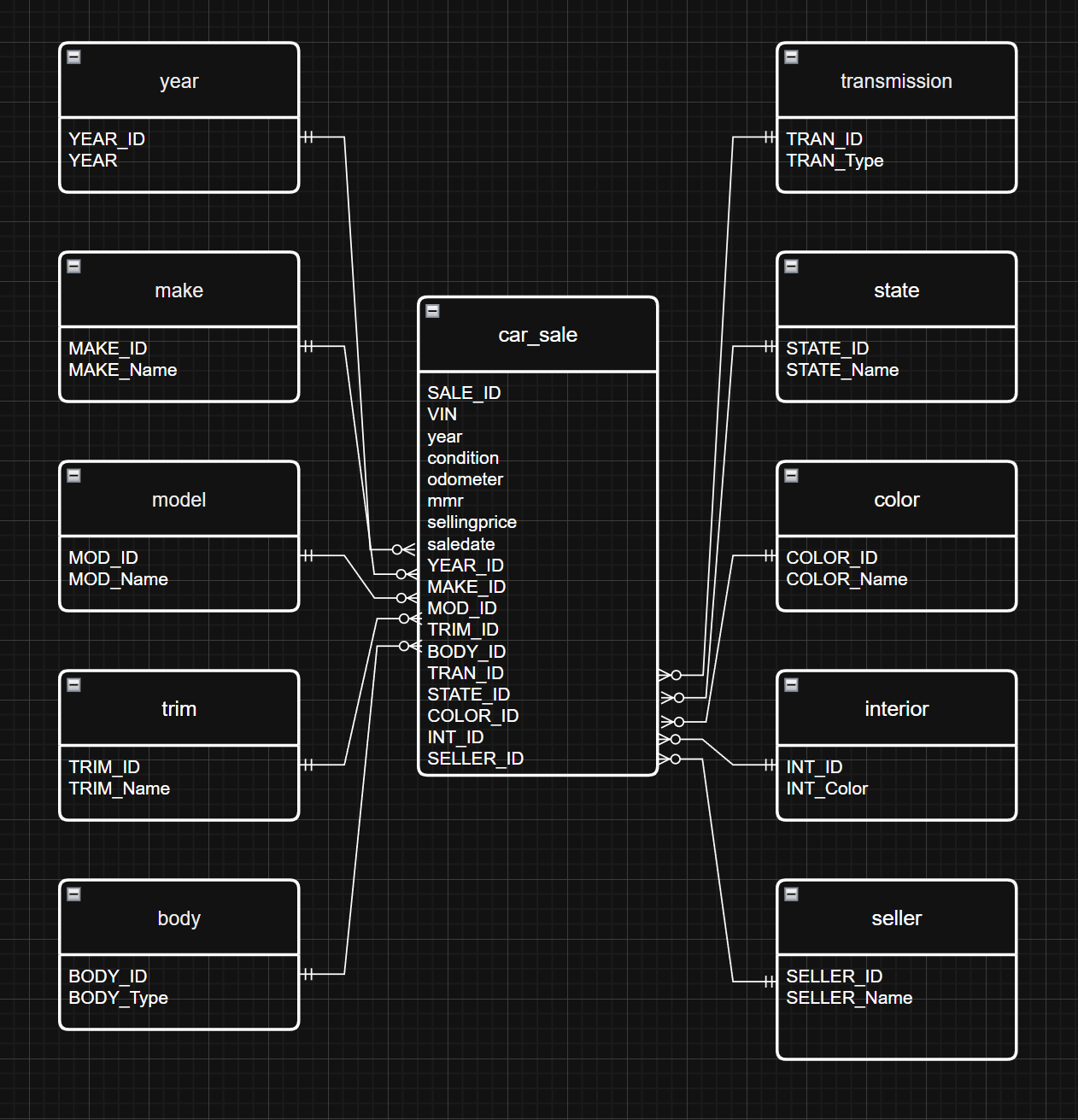
Conceptual diagram describing preliminary structure and cardinality:
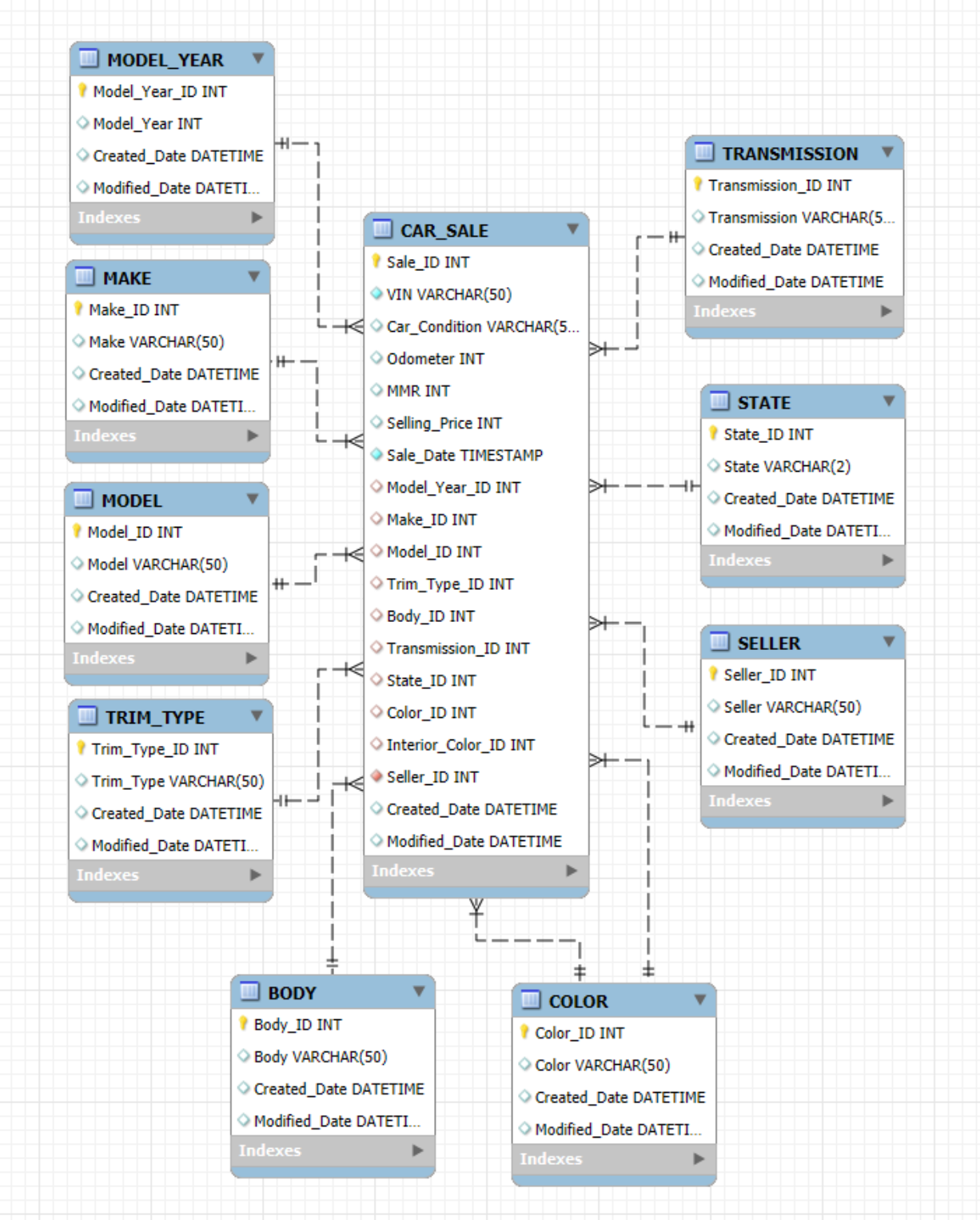
Physical model diagram created using reverse-engineer method:
SQL excerpt defining tables, primary keys and foreign keys:
CREATE TABLE MAKE
(Make_ID INT AUTO_INCREMENT,
Make VARCHAR(50),
Created_Date DATETIME DEFAULT NOW(),
Modified_Date DATETIME DEFAULT NOW(),
CONSTRAINT PK_MAKE PRIMARY KEY (Make_ID));

ALTER TABLE CAR_SALE
ADD CONSTRAINT FK_CAR_SALE_Make_ID FOREIGN KEY (Make_ID)
REFERENCES MAKE(Make_ID);
Results:
After data input and configuration, I’m able to define queries:
SELECT
   seller,
   COUNT(*) AS cars_sold,
   ROUND(AVG(mmr - sellingprice),2) AS avg_discount_vs_mmr,
   ROUND(AVG(car_condition),2) AS average_condition,
   ROUND(AVG(odometer),2) AS average_odometer
FROM vw_ALL
GROUP BY seller
HAVING COUNT(*) > 100
ORDER BY avg_discount_vs_mmr DESC
LIMIT 10;
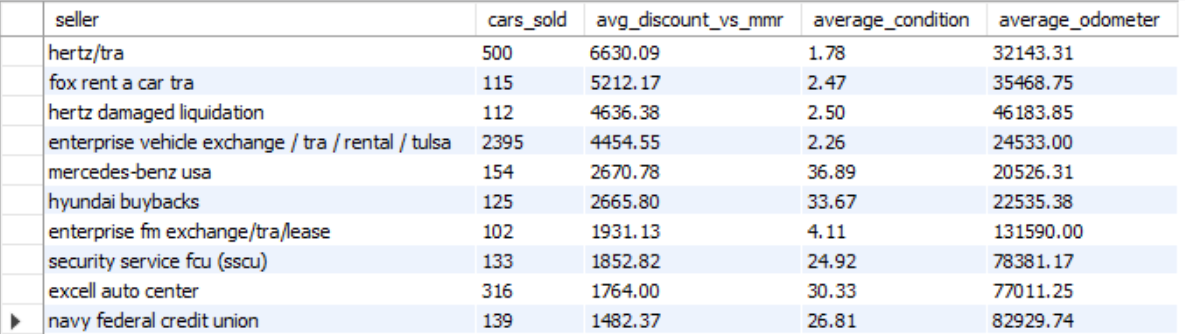
Output:
This table is a short guide to high-volume sellers who regularly price below Manheim Market Report value, sorted by greatest savings.
What I’d do next:
- Dive deeper into integrity
- Improve efficiency with indexes
- Anticipate team usage (roles, backups, deployment)